EN / ES
Book a call
Enquire With Us
EN / ES

In-house legal practice of Onesto Management Consultancy

Litigation, recovery and corporate legal services in India

Legal support in India, for companies that cannot afford to be told to wait.

Onesto Legal acts for foreign companies with disputes, recoveries and contracts in India. Money that has not been paid, a distributor who has stopped performing, a supplier who has taken an advance and gone quiet, a contract that is being read differently on each side.

New DelhiOur own office and advocates, no chain of intermediaries
Delhi + BilbaoEuropean clients are not waiting a day for a reply
One teamThe same advocates from first notice to enforcement
In writingA written opinion you can take to your board

Who we are

We send the legal notice, we file the recovery suit, we appear in court, and we do it from an office in New Delhi.

We are the in-house legal practice of Onesto Management Consultancy, which means the same people who understand your commercial position in India also run the litigation. Nothing is explained twice.

We also act for Indian companies and individuals across corporate, commercial, civil and criminal matters, and in the ordinary course of advisory work: incorporation, contracts, licensing, employment and regulatory compliance.

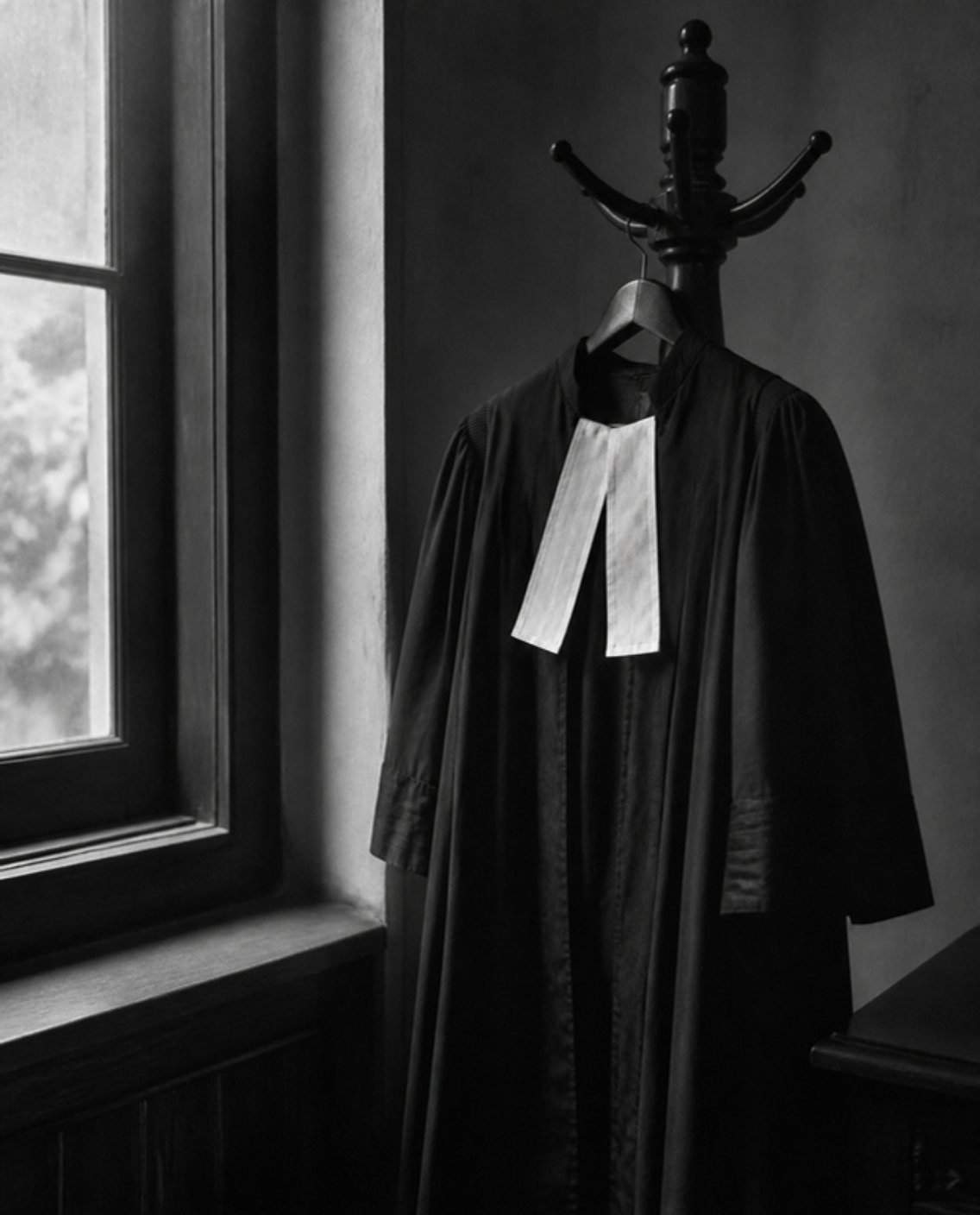
An advocate's black gown and white bands on a coat stand
Advocates in New Delhi

Principal practice

Disputes for foreign companies in India.

A European company with a problem in India usually has more remedies available than it realises, and less time than it thinks. Limitation periods run whether or not anyone is looking at the file.

Route 01

Recovery of unpaid money

Unpaid invoices, unreturned advances, distributor dues, retained security deposits, damages for breach. We assess which recovery route actually fits the paperwork you have, then run it.

Summary suit, commercial suit, arbitration, cheque dishonour complaint, insolvency route

Route 02

Contract and commercial disputes

Distribution and agency terminations, supply failures, quality and rejection disputes, joint venture and shareholder disagreements, exclusivity and territory breaches, wrongful use of confidential material.

Injunctions, specific performance, damages, termination advice

Route 03

Arbitration and enforcement

Domestic and international commercial arbitration under the Arbitration and Conciliation Act, 1996, including interim protection under Section 9, appointment of arbitrators, and challenges to awards.

Enforcement of foreign awards, Section 44A execution of foreign decrees

Route 04

Fraud and criminal remedies

Where the facts show cheating, criminal breach of trust or forgery rather than a commercial disagreement, a criminal complaint changes the position considerably. We advise honestly on when it applies and when it does not.

Complaints, FIR, economic offences, asset tracing, defence work

Route 05

Insolvency as a creditor remedy

Where an Indian company owes an operational debt above the statutory threshold, a demand notice and an application under the Insolvency and Bankruptcy Code, 2016 can be a faster route than a civil suit.

Operational creditor applications, claim filing, committee representation

Route 06

Regulatory and customs problems

Consignments held at port, licensing refusals, certification and BIS issues, tax and GST demands, show cause notices and departmental proceedings that stop a business from operating.

Representations, appeals, writ jurisdiction where warranted

Debt recovery in India

Recovery suits, and the four faster things to try first.

Filing a suit is not always the quickest way to be paid. It is often the fourth option, not the first. What follows is the sequence we actually work through.

Step 01 of 05

Legal notice

A properly drafted demand notice, sent by an advocate on record in India, resolves a meaningful share of matters before anything is filed. It sets out the debt, the contractual basis, the interest claimed and the consequence of non payment, and it puts the other side on notice that limitation and litigation are now live.

A weak or wrongly worded notice can compromise the case that follows it, which is why this is not a template exercise.

Demand noticeNotice of breachTermination noticeReply to legal notice

Limitation Act, 1963

How long is left on your claim?

For most money claims arising out of contract, the limitation period in India is three years from when the cause of action arose. It is the single most common way a good claim is lost.

The date shown is an example. Change it to the due date of your unpaid invoice.

A rough guide only, not advice on any particular matter. Written acknowledgements of the debt and part payments can extend the period, and some claims run on different clocks. Send us the papers for a real answer.

0days left
--

Pre litigation

Legal notices, drafted and answered.

Most of what we do never reaches a courtroom. A notice that is precise, correctly grounded and clearly serious does a great deal of work on its own.

A hand signing a document with a fountain pen beside a seal
Demand notice for unpaid dues
Notice for breach of contract
Termination of distributorship or agency
Section 138 statutory notice
Insolvency demand notice
Notice invoking arbitration
Trademark and copyright infringement notice
Cease and desist notice
Notice for recovery of advance
Employment and termination notice
Notice to vacate premises
Defamation notice
Reply to a legal notice received
Notice under a shareholders agreement
Consumer and warranty notice

Practice areas

What we handle.

The practice runs across corporate advisory and contentious work. Most instructions from foreign clients begin in one and move into the other.

Commercial litigation

Civil and commercial suits before the District Courts, Commercial Courts, the High Court of Delhi and other High Courts, and appellate work. Injunctions, specific performance, declaratory relief, damages, and applications for interim protection where assets or reputations are at immediate risk.

Civil suitsCommercial CourtsInjunctionsAppealsWrit petitions

Debt recovery

Recovery suits, summary suits, cheque dishonour complaints, insolvency applications by operational and financial creditors, execution and attachment. Acting for creditors and, where instructed, defending recovery claims.

Recovery suitMoney suitOrder XXXVIIIBC Section 9Execution

Arbitration

Domestic and international commercial arbitration, institutional and ad hoc. Drafting and reviewing arbitration clauses, invocation, appointment applications, interim measures, conduct of proceedings, challenges to awards and enforcement including of foreign awards in India.

Arbitration and Conciliation Act 1996Section 9Section 11Section 34Foreign awards

Corporate and commercial

Company incorporation and entity structuring for foreign investors, joint ventures and shareholders agreements, distribution and agency agreements, supply and manufacturing contracts, non disclosure and technology agreements, mergers and acquisitions, due diligence, foreign investment and exchange control questions under FEMA.

Company formationSubsidiary setupJoint venturesContract draftingFDI and FEMADue diligence

Criminal and white collar

Cheating, criminal breach of trust, forgery and fraud, economic offences, and the criminal aspects of commercial disputes, under the Bharatiya Nyaya Sanhita, 2023 and its procedural counterpart which replaced the Indian Penal Code and the Criminal Procedure Code. Complaints and prosecution on one side, and defence, anticipatory bail, bail and quashing on the other.

Criminal complaintFIRAnticipatory bailQuashingEconomic offencesCheque bounce

Civil and property

Title and ownership disputes, partition, possession and eviction, landlord and tenant matters, specific performance of agreements to sell, succession and inheritance, property due diligence and documentation, and civil suits generally.

Property disputesTitle verificationEvictionPartitionSpecific performanceSuccession

Employment and labour

Employment contracts and handbooks, terminations and settlements, non compete and confidentiality questions, statutory compliance including provident fund and gratuity, workplace investigations, POSH compliance, and disputes before labour authorities and tribunals.

Employment contractsTerminationLabour compliancePOSHIndustrial disputes

Regulatory and licensing

Product and sector licensing, BIS certification, FSSAI registration, import export code and DGFT matters, customs classification and valuation disputes, GST and tax notices, environmental and factory approvals, and representation before departments and regulators.

Licences and permitsBISFSSAICustomsGST noticesShow cause replies

Intellectual property

Trademark searches, filing and prosecution, oppositions and rectification, copyright and design matters, infringement and passing off actions, cease and desist notices, and enforcement against counterfeiting. A recurring problem for European brands entering India is discovering the mark has already been registered by someone else.

Trademark registrationOppositionInfringementPassing offCopyrightCease and desist

Insolvency

Proceedings under the Insolvency and Bankruptcy Code, 2016 before the National Company Law Tribunal. Applications by operational and financial creditors, defence of applications, filing and proving claims, and representation in the committee of creditors and resolution process.

IBCNCLTOperational creditorClaim filingResolution process
Sectors

Where the work comes from.

The group manufactures electrical switchgear in India and advises on trade between India and Europe. Industrial and trade disputes are the work we know best.

Manufacturing and engineering Electrical and switchgear Chemicals Agriculture and agri inputs Food and FMCG Textiles and garments Automotive and components Machinery and industrial equipment Logistics and shipping Construction and infrastructure Technology and services Real estate Pharmaceuticals and healthcare Trade and distribution

How we work

What happens when you write to us.

We tell you at the start what the realistic outcome is and roughly what it will take to get there, including when the answer is that the matter is not worth pursuing.

01

You send the papers

The contract, the invoices, the correspondence, and a short account of what happened. Documents matter more than the narrative.

02

We assess

What remedies are open, whether limitation is a problem, which forum applies, and whether the other side has assets worth pursuing.

03

Written opinion

The options set out plainly, with the likely timeline and cost of each, and a recommendation. In writing, so you can take it to your board.

04

We act

Notice, filing, appearance and enforcement, with the same advocates throughout and reporting you do not have to chase.

Common questions

What foreign companies usually ask.

General information only, not advice on any particular matter. Every case turns on its own documents and facts.

Our Indian distributor or buyer has not paid. What are our options?

Broadly five. A legal notice demanding payment. A complaint under Section 138 of the Negotiable Instruments Act if a cheque was given and has bounced. A summary suit under Order XXXVII of the Code of Civil Procedure if the claim rests on written documents. A commercial suit or arbitration depending on what the contract says. Or, where the debt exceeds the statutory threshold, an application under the Insolvency and Bankruptcy Code, which many Indian companies take more seriously than a civil suit.

Which of these fits depends almost entirely on your paperwork, so the first thing we ask for is documents rather than a call.

Can a foreign company file a case in India?

Yes. A foreign company can sue in Indian courts and can be sued in them. You do not need an Indian subsidiary or a place of business in India to bring a claim. What you do need is a properly executed power of attorney authorising someone to act and to sign pleadings on the company's behalf, and depending on the document, notarisation and apostille or consular legalisation in your own country. Getting that authorisation drafted correctly at the start avoids objections later, and it is a common reason foreign claims lose time in the first few months.

How long does a recovery case take in India?

It varies widely and anyone who gives you a confident single number is guessing. A cheque dishonour complaint or a summary suit generally moves faster than an ordinary civil suit. Commercial Court matters run to statutory timelines that are tighter than the general civil system. Arbitration can be quicker still, though enforcement afterwards adds time. What we can tell you at the outset is the realistic range for your particular route and forum, and where the usual delays occur, so the decision to proceed is made with the timeline in view rather than in spite of it.

Is there a time limit for recovering money in India?

Yes, and it is the single most common way a good claim is lost. The Limitation Act, 1963 prescribes limitation periods, and for most money claims arising out of contract the period is three years from when the cause of action arose. Certain acknowledgements of debt in writing, and part payments, can extend it. If an unpaid invoice in India is approaching three years, that should be looked at now rather than at the next board meeting.

Can we enforce a foreign arbitration award in India?

Generally yes, where the award comes from a country that India has notified as a reciprocating territory under the New York Convention, and where the award and agreement satisfy the requirements set out in Part II of the Arbitration and Conciliation Act, 1996. Enforcement is resisted on limited grounds, and Indian courts have over recent years narrowed how widely those grounds are read. The practical questions are usually whether the award debtor has assets in India, and where they are, because that determines which court you apply to.

Can we enforce a foreign court judgment in India?

It depends on which country the judgment is from. Judgments of superior courts in territories that India has declared reciprocating can be executed directly under Section 44A of the Code of Civil Procedure, as if they were decrees of an Indian court. The United Kingdom and Singapore are among those notified. Judgments from countries that are not notified, which includes much of continental Europe and the United States, cannot be executed directly. They have to be sued upon afresh in India, with the foreign judgment used as evidence. That distinction is worth knowing before you choose a jurisdiction clause, not after.

Should our contract say arbitration or Indian courts?

There is no universally correct answer, and the honest response depends on deal size, where the counterparty's assets sit, whether you expect to need urgent injunctive relief, and how much control you want over timelines and cost. What we would say firmly is that a badly drafted dispute resolution clause causes more damage than almost any other clause in a contract. Clauses that name a non existent institution, mix arbitration with an exclusive court jurisdiction, or leave the seat unstated produce a preliminary fight before anyone reaches the actual dispute.

Our supplier took an advance and has stopped responding. Is that criminal?

Sometimes, and sometimes not. A commercial failure to perform is generally a civil matter. Where there is evidence of dishonest intention at the time the money was taken, of misrepresentation, of forged documents or of diversion of funds, the position can amount to cheating or criminal breach of trust, and a criminal complaint becomes available alongside the civil claim. We will tell you plainly which of the two your facts support. Dressing up a contractual dispute as a criminal complaint tends to be seen through, and it can damage the civil case running beside it.

Do we have to travel to India for the proceedings?

Usually not for routine hearings. Advocates appear on your behalf, and much of the Indian court system now supports video appearances for parties. Attendance is generally required only where evidence has to be led and a company witness must be cross examined, and even then arrangements can sometimes be made. Most of our foreign clients handle an entire recovery matter without leaving Europe.

Are you our lawyers, or do you refer the work to a law firm?

We act. Onesto Legal is the in-house legal practice of Onesto Management Consultancy, with advocates in New Delhi. Instructions are handled by our own team rather than passed to an outside firm, and where a matter needs local counsel in another state or specialist senior counsel, we brief and manage them ourselves and remain your point of contact.

How are fees charged?

Depending on the matter, on a fixed fee for defined pieces of work such as a notice, a contract or an opinion, or on a stage basis for litigation with fees agreed before each stage begins. You are told what a step costs before it is taken. We will also say when the likely recovery does not justify the cost of pursuing it, because that is more useful to you than a file that stays open.

The team

Who will handle your matter.

The people named here are the people you deal with. Instructions are not passed down to someone you have never spoken to.

Aakash Rana
Legal Head

Aakash Rana

Heads the practice from New Delhi and leads the litigation and dispute resolution work, including recovery matters, commercial suits and criminal proceedings. Day to day conduct of contentious matters sits with him.

Shashank Malik
Advocate

Shashank Malik

Advocate, and founder of Onesto Management Consultancy. Doctoral candidate in International Law at the University of Deusto, Bilbao. Works on cross border matters, corporate structuring and the international aspects of disputes between Indian and European parties.

Sangita Jaiswal
Advocate

Sangita Jaiswal

Advocate, co-founder and director of Onesto Management Consultancy. Doctoral candidate in International Law at the University of Deusto, Bilbao. Works on corporate and commercial advisory, contracts, regulatory matters and civil litigation.

Write to us

Send us the documents, and we will tell you where you stand.

That is enough for us to say what remedies are open to you and whether the matter is worth pursuing.

The contract
The invoices
The correspondence
A short note on what happened

This page provides general information about Onesto Legal and is not legal advice, a solicitation or an advertisement. Reading it or writing to us does not create an advocate and client relationship. Every matter turns on its own documents and facts.